A couple of people asked about how I oven-dried my tomatoes last summer. I'm re-posting my method below. Thanks for asking!
(originally posted September 2012)
*************************************************
I have never canned anything before, and I don't think I grow enough food to go through the trouble of canning. I like the idea of preserving fresh food for the winter, and we do freeze a lot of food. I have local squash, spinach, and broccoli in the freezer that I haven't got around to using yet. Peppers freeze very easily--we clean them, core and remove the seeds, and then slice or chop them up, put them in a container, and leave them in the freezer. When I'm ready to use my peppers, I often just run them under water to soften them up and then they're ready to chop and add to your dish.
I had several ripe tomatoes on hand and decided to try oven roasting them.
These are so many recipes online with varying times and oven temperatures, and after sorting through all of them, I decided to follow this one by David Lebovitz. The length of time is hard to gauge because it depends on the size and moisture level of tomatoes. I've read that Roma tomatoes are best because they have a lower water content than others. Unfortunately my pile of tomatoes was of different varieties and sizes, so I loosely followed his recipe, but mainly decided to wing it.
I had one beefsteak tomato, a few Romas, a handful of cherries, and some Pink Brandywine heirlooms from my garden. I waited until we had a cloudy, somewhat cool day so that running the oven for 3 hours wouldn't stifle us to death in the summer heat. Here's what I did:
Oven-Dried Tomatoes
- Preheat oven to 325°F
- Cut the tomatoes in half horizontally, remove the stems, and remove the seeds. I patted dry some of the juicier tomatoes with a paper towel to remove some excess moisture.
- In an 8x8 pyrex baking dish, add about 3 tbsp olive oil, one clove of garlic, 1 tbsp dried oregano, 1 tbsp dried basil (from my garden!), and salt and pepper.*
- Toss tomatoes around in dish so that all sides are coated.
- Place tomatoes cut side down in the dish.
- Bake for 2 1/2 hours or until tomato skin is wrinkly. (Some of my smaller tomatoes were ready after 2 hours).
*Feel free to add your own combination of herbs and seasonings here. I think next time I'm going to use rosemary and thyme, or maybe do one dish with oregano only.
Here's the finished product. They don't look very pretty, but let me tell you, they smelled fantastic! The whole house smelled like olive oil, oregano, and basil, like a pizzeria! I almost hyperventilated from inhaling all that yumminess. I let them cool a little and then put them in a freezer bag. I think they'll be great in soups and sauces later this Fall.
Showing posts with label how to. Show all posts
Monday, April 1, 2013
Wednesday, June 1, 2011
How to Freeze Strawberries
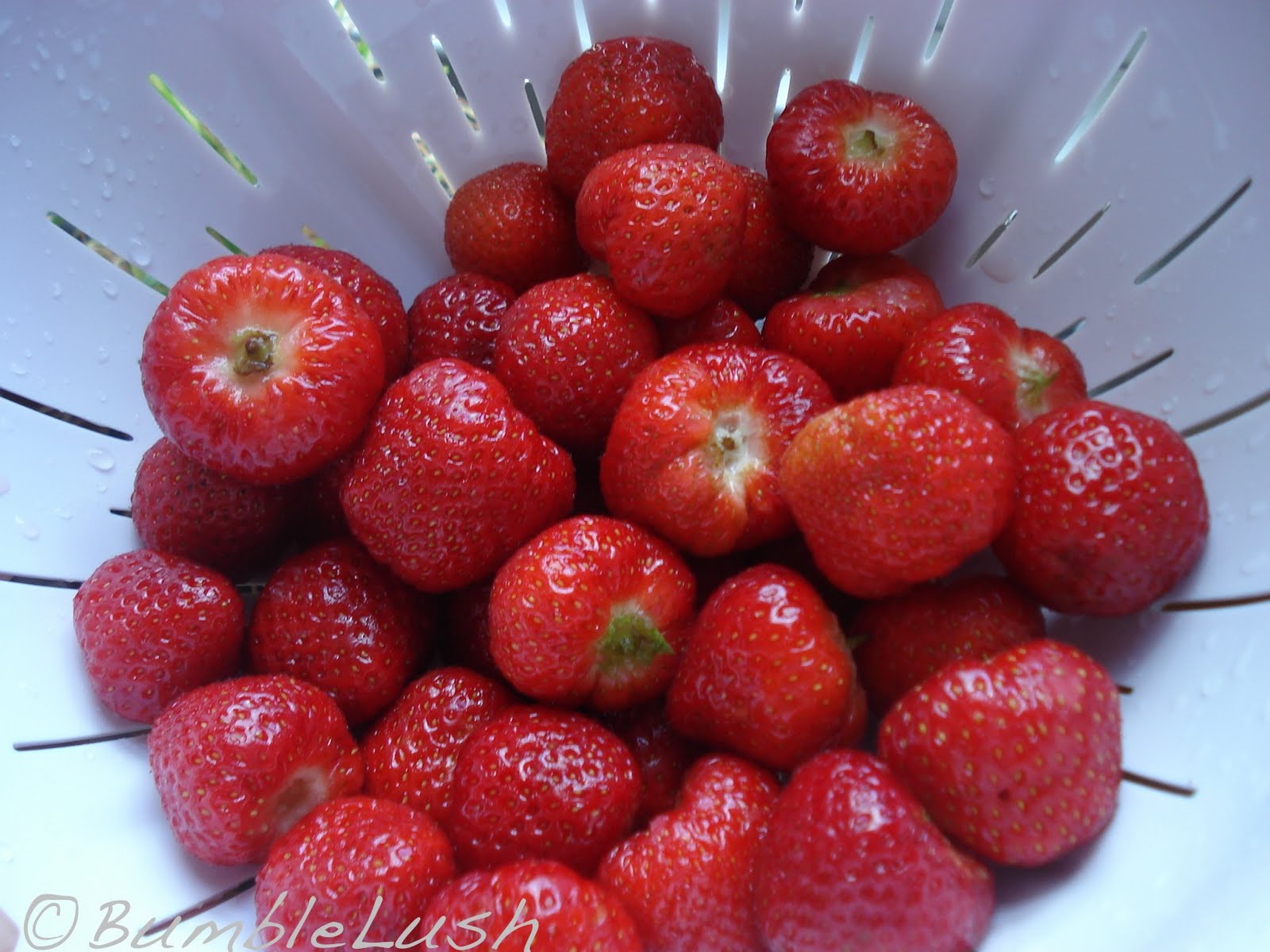
We've never frozen fresh fruit before, so I searched the internet for proper techniques, and predictably, found some conflicting directions. Do I leave the caps on or remove them before freezing? In the end, I decided to follow these directions which say to hull/remove the green caps on strawberries before freezing. I chose this option because it seems more convenient--I'll do all the work upfront and when I'm ready to use the berries, they'll be ready to go after I defrost them.
How to freeze strawberries (and what I learned):
1. Wash strawberries carefully. Strawberries are delicate.They bruise and squish easily, so take care not to poke the flesh when washing. Of course, if they do squish, feel free to eat and enjoy that fresh-picked berry.
2. Let the berries drain (about 10-15 minutes) and remove the caps (aka, hull the berries). I've seen fancy hulling gadgets in the stores that look like tweezers, but I just use a plain old paring knife to pop the stem out. Again, take care not to pierce the flesh, or you'll have to eat that juicy berry right then and there.
3. Once strawberries are drained, spread them on a baking sheet or pan. Berries should be in one layer and not overlapping to prevent them from sticking together in the freezer. Note 1: Use whatever flat dish you have. I have a side-by-side refrigerator/freezer, and the freezer door wouldn't close because the baking sheets stuck out. I had to improvise. I used glass Pyrex dishes and pie pans. Note 2: Put wax paper down on any glass surface before you spread the strawberries out or they will stick very firmly to the glass and it will be difficult to get them off.
| Forgot to add wax paper. That was a mistake. |
4. Freeze the strawberries. The directions I followed said to let the berries freeze overnight, but mine were frozen solid after about four hours.
| Don't you just want to add whipped cream or chocolate to these? |
5. Bag the strawberries and return them to the freezer. Remove the strawberries from the pans and place in freezer bags or any other container used for holding frozen food. We filled five one-gallon size Ziplock freezer bags. The directions I followed also said to label and date the bags, but you'll see that I didn't do that because I can tell they're strawberries and I froze them all over Memorial Day weekend. If I do this again before this original batch runs out, of course I would write a date on the bag.
Final thoughts:
- The strawberries at the bottom of the flats got a little squishy from the weight of the other berries. We didn't freeze those; we'll just eat them as they are. This is a good reminder for the next time I go picking though: be careful about the weight piling on top of the berries at the bottom of the container.
- My friends sliced up the berries before they froze them. I didn't do that, but I don't see why you couldn't.
- The purpose of freezing these berries was to have a plethora of farm-fresh berries to enjoy over the winter. After going through all this work, it'll probably be winter before I'm ready to look at another strawberry again. I wonder how long all these will last? I guess it'll depend on what I use them for. Now I just need to find some interesting recipes.
Do you have any tips/techniques you'd like to share for freezing or generally preserving fruit or vegetables picked from the garden?
Sunday, April 11, 2010
How To Treat Spider Mites
April 10, 2010 - Jalapeno Plant Update
About 2 weeks ago I blogged about coming home to find that the cat had attacked the poor pepper plant: the leaves were on the floor and one of his big branches -- the only one with a pepper -- was on the ground. A day later it was infested with spider mites. We're not sure how they got in because the plant had been kept indoors all winter. We think that they were waiting in the soil, and after it was traumatized they sensed the plant's vulnerability and attacked. We mixed dish soap and water and sprayed the plant outside, then left it out there, hoping the soapy water solution and cold evening temps would kill the mites.
Our recipe: using a 16 oz. spray bottle, we added 3 pumps of Dawn Direct Foam and filled the rest with water. It was very sudsy.
We sprayed the plant hard on top and underneath the leaves several times. It seems to have done the trick. We haven't seen signs of mites, and it's even producing a few blooms. I grew this little plant from seed. I watched him grow from a tiny spindly little stick to a pretty healthy plant that has survived caterpillars, a cat attack, and hopefully the mites. Hang in there Pepe!
Subscribe to:
Posts (Atom)